Architecture
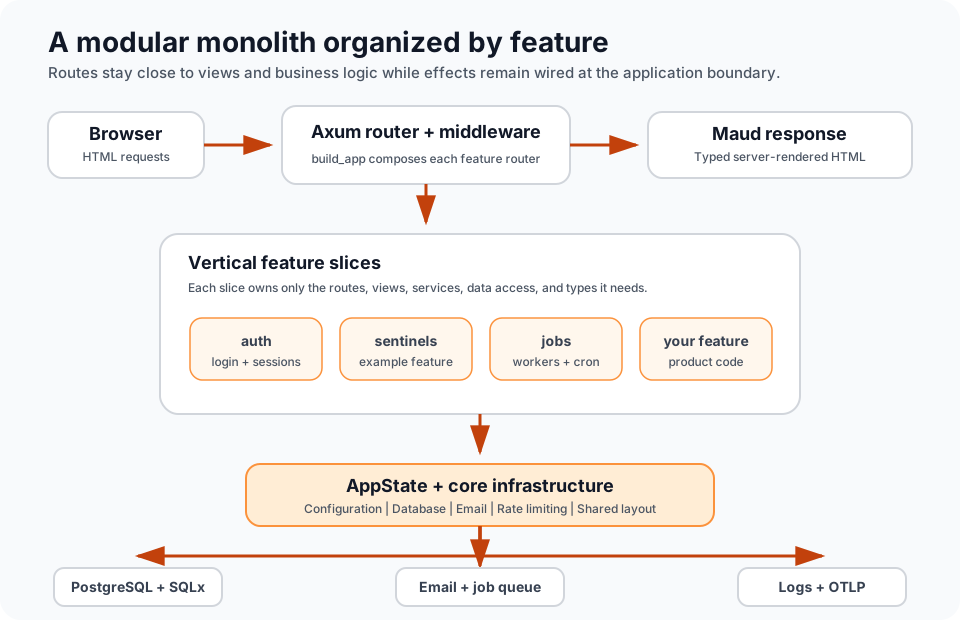
CloudSeed is a modular monolith: one deployable application organized into vertical feature slices. Each slice keeps its routes, views, services, data access, and types together. Shared infrastructure lives in core.
src/
├── auth/       Passwordless login, sessions, and rate limiting
├── core/       Configuration, database, email, errors, and shared views
├── health/     Process and database health endpoints
├── index/      Starter landing page
├── jobs/       Background jobs, retries, cron, and metrics
├── sentinels/  Example vertical feature slice
├── telemetry/  Structured logging and optional OTLP export
├── lib.rs      Router composition and shared application state
└── main.rs     Startup, workers, HTTP server, and shutdown coordination

migrations/     Application and job-queue database schema
docs/           Markdown documentation and source-controlled diagrams
tests/          Integration tests with disposable PostgreSQL databases
styles/         Tailwind CSS and DaisyUI source
static/         Runtime static assets
crates/         Internal workspace crates
Request flow
build_app composes feature routers and middleware around a shared AppState. Handlers receive only the state and request data they need. Database, email, background jobs, rate limiting, session signing, and the application base URL are wired at the application root.
Feature slices
Create a top-level module such as src/billing.rs, then keep implementation files under src/billing/. Start with only the files the feature needs:
*_routes.rsfor HTTP handlers and route composition*_views.rsfor Maud HTML*_service.rsfor business operations*_data.rsfor database access*_types.rsfor feature-specific data types
Expose the slice's router from its top-level module and merge it in build_app.
Effects and testing
CloudSeed keeps external effects behind traits where substitution matters. EmailSender and JobQueue use production implementations in the running app and test implementations in focused tests. Integration tests exercise SQL and route wiring against real temporary PostgreSQL containers.